


Views: 0 Author: Site Editor Publish Time: 2026-03-31 Origin: Site
As a student, you're constantly juggling lectures, readings, assignments, and exams. Whether you're in high school, university, or pursuing professional certifications, the sheer volume of information can feel overwhelming. Lecture slides, textbook chapters, online articles, formulas, and definitions all compete for your attention—and your memory. Without a clear system for capturing and reviewing key points, important facts can slip through the cracks, deadlines can sneak up on you, and your study sessions can become inefficient or unfocused.
That's where sticky note pads come in. Far more than just colorful paper scraps, sticky notes are versatile, portable, and interactive tools that help you distill complex material into bite-sized reminders. By using them strategically, you can transform a chaotic pile of notes into an organized, visual study ecosystem
When you skim a textbook chapter or review lecture slides, it's tempting to copy down every sentence that seems important. But lengthy transcription often backfires: your hand can't keep pace with your thoughts, and you end up with pages of dense notes that are difficult to review. Instead, sticky notes force brevity. By condensing a page of content into a single note, you practice the art of summarization—a skill that strengthens comprehension.
Identify the core idea. After reading a section, ask yourself: What’s the single most essential takeaway? Jot that onto a sticky note in your own words.
Use bullet points. If there are two or three sub-points—such as steps in a process or properties of a concept—bullet them concisely below the main idea.
Leverage visuals. For formulas or diagrams, sketch a simplified version on the sticky note rather than writing out lengthy derivations.
Sticky notes shine when you arrange them on a blank surface—your desk, a notebook page, or a wall. Because each note is a standalone piece, you can group related concepts together, spot gaps in your understanding, and reorganize as you deepen your knowledge.
Cluster by topic. On a large poster or whiteboard, create thematic zones (e.g., “Cell Biology,” “Genetics,” “Evolution”) and place sticky notes accordingly.
Sequence chronologically or hierarchically. For historical events or classification systems, line up notes in chronological order or by level of specificity (e.g., Kingdom → Phylum → Class).
Color-code. Assign colors to different chapters, subject areas, or levels of difficulty. A red note might signal “needs review,” while green could indicate “mastered.”
By transforming your notes into a living diagram, you enhance both recall and understanding.
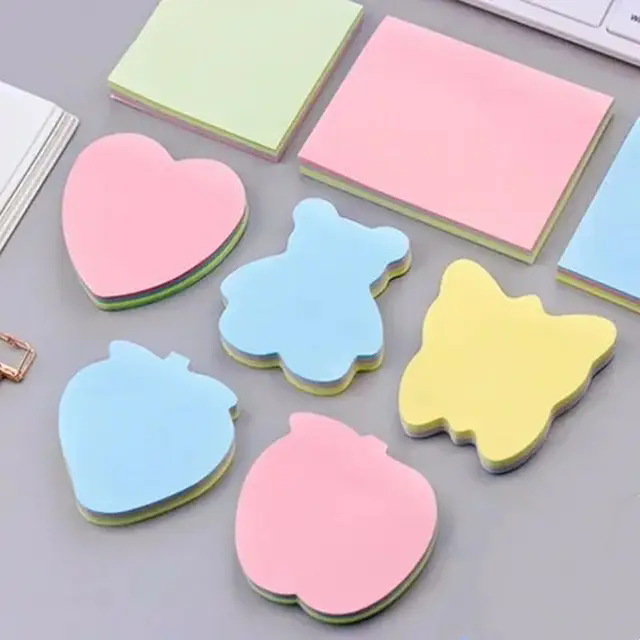
Traditional index cards are useful, but sticky-note flashcards add a layer of flexibility: you can stick them into your textbook, on your planner, or on the back of a door—wherever you'll see them most. Here's how to create and use them effectively:
Write the prompt or question on the front of the sticky note. This could be a term (“Mitochondria”) or a question (“What is the function of the mitochondria?”).
On the back, write the concise answer or definition. Because the note is small, you’ll focus on the key fact rather than tangential details.
Stick strategically. Place flashcards in contexts that reinforce the material. A biology flashcard on the fridge serves as a visual cue as you grab breakfast; a calculus formula by your desk prompts a quick mental review between assignments.
Rotate and replace. As you master concepts, remove those flashcards from prominent positions and replace them with new ones. This mimics the spaced-repetition principle, which strengthens long-term retention.
Sticky-note flashcards also excel in group settings. During a study session with classmates:
Exchange cards. Trade flashcards so each student faces fresh prompts.
Shuffle and sort. Mix everyone’s notes and challenge each other in rapid-fire Q&A.
Collaborate on creation. Pool sticky notes to build a comprehensive deck of questions and answers for a given topic.
By actively engaging with peers, you harness both social learning and the retrieval practice that underpins effective studying.
Many academic subjects involve multi-step workflows—problem-solving in math, scientific methods in experiments, or stages of literary analysis. Breaking these processes into discrete steps on individual sticky notes helps clarify each action and the logical flow between them.
Example: Solving a Math Equation
Note 1: “Identify the variable and isolate it.”
Note 2: “Apply inverse operations to both sides.”
Note 3: “Simplify and solve for x.”
Note 4: “Check the solution within the original equation.”
Laying these out in sequence ensures you don’t skip a critical step under exam pressure.
In fields like history or economics, understanding causality is key. Create a chain of sticky notes that link causes to effects:
“Industrial Revolution starts” → “Urbanization increases” → “Public health concerns emerge” → “Sanitation reforms enacted.”
Visually mapping these connections reinforces your grasp of how events or concepts interrelate.
For highly abstract or theoretical material—such as philosophical arguments or advanced scientific theories—divide each core principle into its own sticky note, then group related principles together. This transforms a wall of dense text into approachable, bite-sized modules.
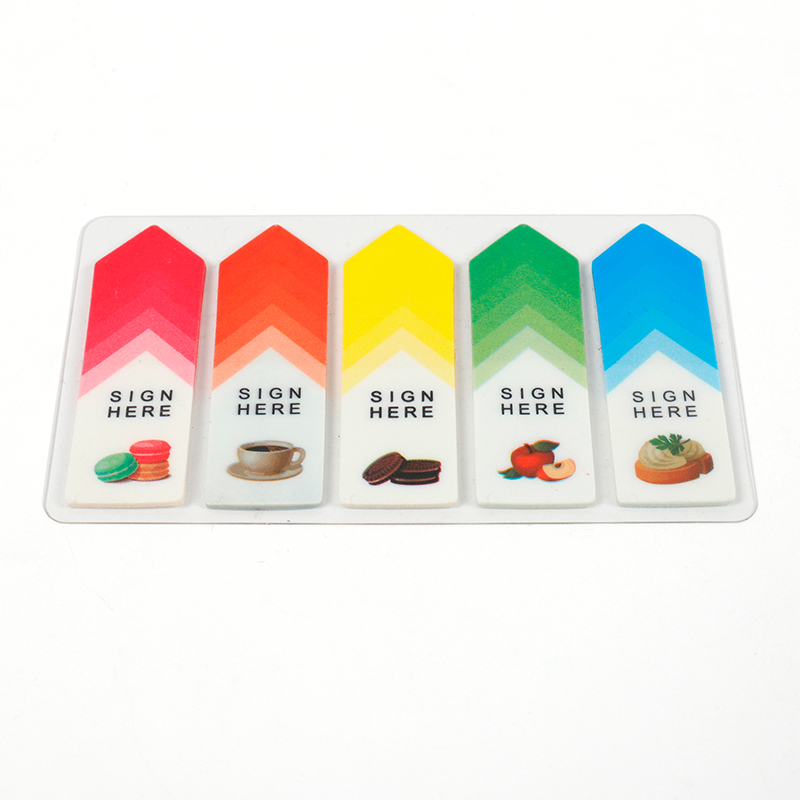
A dedicated study board—physical or digital—populated with sticky notes can serve as a dynamic to-do list. Organize notes into columns like “To Learn,” “Learning,” and “Mastered.” As you work through tasks, move notes across the columns to visualize your progress.
To Learn: New topics or unfamiliar chapters.
Learning: Concepts you’re currently reviewing or working on.
Mastered: Topics you’ve confidently understood and can skip in review.
This Kanban-inspired approach encourages focused effort on just a few notes at a time, reducing overwhelm and providing frequent motivational boosts as you see cards migrate to “Mastered.”
Sticky notes facilitate the breakdown of large study sessions into micro-goals—15- or 30-minute sprints with a specific target (e.g., “Read and summarize pages 45–50”). When you stick a micro-goal on your desk, you commit to focused work, then can reward yourself (a short break, a snack, a quick stretch) once you move the note to “Done.”
Pair sticky-note study plans with accountability partners. Share your board or individual notes with a friend: when you accomplish a note, you send them a photo; they do the same for their own. This social commitment helps keep both parties on track.
Sticky note pads are deceptively simple tools, yet their impact on student productivity and retention is profound. By encouraging concise summarization, enabling flexible flashcards, breaking down complex processes, and providing interactive to-do systems, sticky notes transform chaotic study routines into structured, engaging, and effective learning experiences.
When you embrace sticky note pads for note-taking, review, and planning, you're not just managing information—you're training your brain to prioritize, visualize, and internalize knowledge. In an academic world where cognitive overload is all too common, these colorful adhesive squares offer a tactile, memorable approach that digital apps alone cannot replicate.
So next time you prepare for an exam or tackle a difficult assignment, reach for a stack of sticky notes. Write down your essentials, stick them where you'll see them, and watch as your study sessions become more organized, targeted, and—ultimately—successful. With sticky note pads at your side, you'll truly organize your study time like a pro.


