Views: 0 Author: Site Editor Publish Time: 2026-07-07 Origin: Site
Physical stationery often gets dismissed as a generic administrative expense. Yet, these simple paper products actually occupy premium real estate right on the client's desk. They serve as high-visibility brand touchpoints day after day. You are seeing a major shift from standard office supplies to strategic, functional marketing assets. When designed thoughtfully, paper products turn every scribbled memo into a silent brand ambassador. We wrote this article to give you a technical and strategic guide to specifying, evaluating, and sourcing custom Note Papers for corporate use. You will learn exactly how to configure paper weights, adhesive types, and layouts to maximize utility. We also walk you through crucial vendor selection criteria and common printing pitfalls to avoid. By the end, you will know how to turn everyday stationery into a memorable brand experience.
Effective customization requires balancing aesthetic brand alignment with functional utility (paper weight, layout, adhesive quality).
Selecting the right physical dimensions and use-case format dictates whether the item is retained or discarded by the end-user.
Evaluating a vendor requires scrutinizing color-matching accuracy, proofing workflows, and bulk scalability, not just upfront unit costs.
Over-branding creates visual clutter; the most effective designs leave ample space for user utility.
Digital advertisements disappear in seconds. A physical notepad sits on a desk for weeks or even months. The compounding value of daily brand visibility is immense. Every time someone jots down a phone number, they see your logo. They interact with your brand in a tactile way. This consistent exposure builds subconscious trust over time. You cannot easily replicate this persistent presence through digital channels alone.
You must clearly define your branding goals before starting the design process. These goals generally fall into internal and external categories. Internal initiatives focus on fostering corporate culture. You want to standardize employee client-facing tools. Providing cohesive stationery ensures a consistent visual identity in meetings. It makes your team look organized and professional. It also boosts internal morale by giving employees high-quality tools.
External branding requires a different approach. You might use these items for trade show giveaways or client appreciation mailers. Many retail brands use them as direct-to-consumer packaging inserts. In these scenarios, the stationery acts as a gift. It must impress the recipient immediately. The tactile quality of the paper speaks volumes about your company.
However, you face a strict functionality imperative. If the stationery isn't highly functional for the user, the branding opportunity is lost. People will throw away a pad if they cannot write on it easily. You must resist the urge to cover the page in giant graphics. Utility always drives retention. If they keep it for its usefulness, they will absorb your brand message naturally.
Selecting the right materials determines the success of your project. Paper stock and weight play a massive role. Manufacturers measure paper weight in grams per square meter (GSM). Standard economy pads usually use 70gsm paper. It is highly economical but prone to bleed-through. Gel pens and markers will ruin the page underneath. Instead, you should aim for premium 90gsm to 120gsm stock. This thickness conveys authority. It also comfortably accommodates fountain pens and heavy inks.
Next, you must choose between adhesive and standard binding. Standard tear-away personalized notepads work best for extensive notes. They are highly cost-effective per page. Conversely, sticky-backed sheets offer unmatched convenience for reminders and brainstorming. They cost more to produce due to the adhesive application. You must evaluate the cost-to-utility ratio for your specific audience. Sometimes, a mix of both formats serves the highest purpose.
Sizing and form factor dictate how people will use the item. Standard sizes like A4 or A5 provide ample room for meeting notes. They belong in conference rooms and briefcases. Compact sizes, such as 3x3 inches or 4x6 inches, belong near telephones and monitors. They are perfect for quick memos and daily tasks. Matching the size to the intended use case increases the chance of daily use.
Visual design real estate requires careful management. You need to position logos, contact information, and watermarks strategically. Follow a strict best practice rule: limit branding elements to 15-20% of the page area. This maximizes the available writing space. Place small logos in corners. Use pale, transparent watermarks if you want central branding. Do not let your design compete with the user's handwriting.
Customization Dimension | Standard Option | Premium Recommendation | Primary Benefit of Premium |
|---|---|---|---|
Paper Weight | 70gsm | 90gsm - 120gsm | Prevents ink bleed, feels authoritative |
Binding Type | Standard Glue Edge | Premium Repositionable Adhesive | Allows flexible memo placement anywhere |
Form Factor | A5 Meeting Pad | 3x3 / 4x6 Die-Cut | Increases desktop retention and novelty |
Branded Area | 30%+ Coverage | 15-20% Coverage | Maximizes usable writing space |
You can elevate your stationery by tailoring the background layout to your target audience's profession. Blank pages offer maximum freedom, but structured pages add value. Grid paper appeals strongly to engineers, developers, and architects. Lined paper remains the gold standard for legal and administrative professionals. Dot-matrix layouts are currently very popular among creatives and bullet journal enthusiasts. Knowing your audience allows you to provide a tool they actively prefer over standard office supplies.
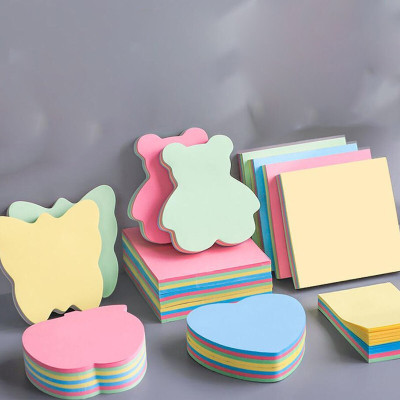
Die-cut shapes offer another powerful branding avenue. You can use custom shapes aligned with your industry or specific logo. A logistics company might use a truck-shaped pad. A dental clinic might use a tooth shape. These novelties grab attention instantly. However, we must provide a transparent analysis of the drawbacks. Custom die-creation involves setup costs and tooling. It also extends turnaround times significantly. You must plan your timeline and budget accordingly if you choose this route.
Eco-friendly and sustainable options are no longer just a trend. They are a corporate necessity. Specifying recycled paper helps align your marketing with corporate ESG (Environmental, Social, and Governance) commitments. You can also request soy-based inks instead of petroleum-based ones. Recyclable adhesives ensure the entire product remains environmentally safe. Highlighting these choices on the back of the pad subtly communicates your brand's values to the user.
Cover and backing board specifications matter for durability. A custom printed cover protects the pages and offers extra space for company messaging. The chipboard backing dictates the structural integrity of the pad. A flimsy backer makes the pad hard to write on unless it sits on a flat desk. A thick, rigid backing board allows users to take notes while standing. Always request heavy-duty chipboard for items intended for field use.
Layout customization: Match the page ruling (lines, dots, grids) to user habits.
Die-cut novelty: Use shapes to create immediate visual interest and brand recall.
ESG alignment: Mandate recycled stocks and non-toxic inks for sustainability.
Structural support: Invest in thick backing boards for better writing ergonomics.
Choosing the right printing partner dictates the final quality of your stationery. Color accuracy and standardization should be your first concern. Most standard digital printing uses a CMYK process. This mixes four colors to approximate your brand hues. It is cost-effective but can yield slight color variations between batches. If you have strict brand guidelines, you must specify exact Pantone (PMS) color matching. PMS uses pre-mixed inks to guarantee exact color replication every single time.
You also need to weigh Minimum Order Quantities (MOQs) against unit cost. Volume heavily impacts pricing tiers in offset printing. Ordering ten thousand units drastically reduces the individual item cost compared to ordering five hundred. However, you must calculate the ROI of bulk ordering versus actual warehousing costs. Storing pallets of stationery takes up valuable facility space. You need a balanced volume strategy.
Below is a summary chart illustrating how you should evaluate volume procurement against storage requirements.
Order Volume Tier | Unit Cost Impact | Warehousing Requirement | Best Use Case |
|---|---|---|---|
Low (Under 1,000) | Highest | Minimal (supply closet) | Niche events, executive use, testing |
Medium (1,000 - 5,000) | Moderate | Low (shelving units) | Branch distributions, annual supplies |
High (10,000+) | Lowest | High (pallet storage) | Enterprise rollouts, national trade shows |
The proofing process acts as your final safety net. Never skip it. You should always demand a physical, hard copy proof for large enterprise runs. A digital PDF proof only checks the layout and spelling. It cannot verify paper texture, thickness, or true color fidelity under office lighting. Reviewing a physical sample before mass production prevents costly reprints.
Fulfillment and distribution capabilities separate adequate vendors from great ones. Assess whether the vendor can split-ship directly to multiple corporate branches or regional offices. Handling distribution internally drains your own logistics team. A capable printing partner will store the bulk order and drop-ship specific quantities to different locations on demand. This service streamlines your entire procurement workflow.
Stationery projects seem simple, but poor execution damages your brand image. Adhesive failure is a major risk for sticky notes. Cheap adhesives cause the paper to curl off surfaces. They might fail to adhere entirely or leave a sticky residue behind. You must verify adhesive grading with your vendor. Ask them about the tack strength and request a sample to test on your own office monitors and walls.
Brand degradation via bleed-through happens when you skimp on paper thickness. Imagine a client taking important meeting notes, only to find the ink ruined the next three pages. They will associate that frustration directly with your printed logo. Upgrading to a heavier text weight eliminates this risk entirely. The slight increase in production cost protects your professional reputation.
Pixelation and artwork errors ruin visual aesthetics. Many companies make the mistake of submitting raster images, like standard JPEGs. These images become blurry and pixelated when printed at high resolutions. You must provide vector graphics, such as .AI or .EPS files. Vector files use mathematical formulas to draw shapes, ensuring crisp, flawless logo reproduction at any size.
Over-promising on turnaround times creates internal friction. Custom manufacturing takes time. Building a realistic procurement timeline is crucial. You must account for art setup, physical proof approvals, printing, binding, adhesive curing, and freight shipping. Expedited shipping adds massive costs. Plan your corporate events well in advance to avoid last-minute panic.
Test the glue: Always verify tack strength with physical samples.
Upgrade the paper: Stop bleed-through by choosing higher GSM stocks.
Use vector files: Submit .AI or .EPS files to guarantee crisp logo edges.
Pad the schedule: Add two extra weeks to your timeline for unexpected freight delays.
The success of branded stationery lies directly in the intersection of premium utility and subtle brand reinforcement. You do not need loud, overwhelming designs. You need functional, high-quality tools that people actually want to keep on their desks. When you invest in proper paper weight, reliable adhesives, and accurate colors, you transform a basic commodity into a daily touchpoint.
We encourage decision-makers to audit their current physical marketing materials immediately. Look at the items you currently distribute. Do they reflect the quality of your services? Reach out to prospective vendors and request physical paper sample kits. Feel the textures and test the pens before committing to a full production run. Thoughtful procurement ensures your brand remains visible, useful, and respected.
A: The sweet spot is 70-80 lb text weight, which translates to approximately 100-120 GSM. This thickness prevents ink bleed-through from gel pens and markers. It maintains cost-efficiency while providing a premium, durable feel that reflects positively on your brand.
A: Yes, you can. You achieve this by specifying exact Pantone (PMS) matching rather than relying on standard 4-color (CMYK) digital processes. PMS uses pre-mixed inks for absolute accuracy. Keep in mind that this precision may incur minor setup fees.
A: Recycled stocks often have a slight texture or an off-white base. This can subtly affect ink color vibrancy. The production cost marginally increases, but the positive brand equity and ESG alignment gained usually outweigh this small premium.
A: A realistic benchmark is 7-14 business days after you approve the physical proof. You must factor in specific manufacturing steps, including binding time and the curing period required for repositionable adhesives, followed by final freight transit.