Views: 0 Author: Site Editor Publish Time: 2026-07-09 Origin: Site
Walking into a meeting with a high-end pen only to have ink bleed through flimsy paper is universally frustrating. We interact with these supplies constantly throughout the workday. Many organizations treat all stationery as identical commodities. They ignore the functional differences between sheets. We often underestimate how much a simple pad impacts daily productivity. Treating these supplies as a monolith leads to compromised professional presentation and ruined archival records. Ink ghosting forces teams to abandon one side of every page. This creates unnecessary friction during rapid note-taking sessions. In this guide, you will discover a transparent, specification-driven framework for evaluating paper quality. We will explore how to select the right Note Papers tailored to distinct departmental workflows. You will learn to balance writing instrument compatibility alongside environmental compliance and practical usage needs.
Standard printer paper is engineered for toner, not ink; dedicated office note paper requires specific sizing and GSM (grams per square meter) to prevent bleed-through.
Procurement should align paper formats (pads, bound, loose-leaf) with departmental workflows (e.g., dot-grid for technical teams, premium lined pads for legal/client-facing roles).
Evaluating paper requires balancing individual user preferences (fountain pen vs. ballpoint) with scalable purchasing realities and sustainability compliance.
Low-quality pages cause serious feathering and ghosting. Feathering occurs when liquid ink spreads outward along untreated paper fibers. It makes handwriting look blurry and unprofessional. Ghosting happens when ink heavily saturates the page. The text becomes completely visible on the reverse side. Bleed-through renders double-sided use impossible. Fast-paced note-taking slows down significantly when pens snag on rough surfaces. We regularly see employees discarding half-used pads because the reverse sides remain unusable. You must recognize these workflow interruptions as genuine productivity barriers. Smooth writing requires materials engineered specifically for your preferred instruments.
Long-term document retention requires specific material stability. Using non-acid-free paper introduces severe risks over time. Standard wood pulp contains lignin. Lignin naturally breaks down and releases acidic compounds. Pages undergo rapid yellowing and develop extreme brittleness. Vital meeting minutes literally crumble away in storage after a few years. Standard office note paper must feature acid-neutral compositions if you plan to archive them. Archival-grade sheets undergo special chemical treatments during manufacturing. These treatments neutralize acids entirely. They guarantee your crucial records remain legible for decades.
Presenting client-facing notes on thin, low-opacity sheets damages professional credibility. Imagine handing a client a critical summary on a flimsy, translucent sheet. Signing important contracts on transparent pages feels remarkably cheap. Subtle material cues heavily influence how clients perceive your brand. You want your stationery to communicate reliability and attention to detail. High-opacity materials provide a solid, confident writing experience. They convey a subconscious message of stability and premium service. Organizations must ensure their client-facing materials reflect their overall brand standards.
Legal and executive environments demand heavy-weight, highly reliable materials. You should source pads featuring 90gsm or higher. Top-bound legal formats require micro-perforations for clean tearing. Smooth finishes accommodate fountain pens and liquid rollerballs perfectly. Executives frequently use these premium instruments during client meetings. Heavy sizing ensures they avoid embarrassing ink smears. Depositions and contract markups require ample margin space. Legal rulings provide specific margin lines designed for these exact annotations. These structured layouts keep complex legal thoughts highly organized.
Software testing and UI/UX teams require entirely different formats. They benefit immensely from dot-grid rulings instead of traditional lines. Wire-bound notebooks lay perfectly flat on crowded desks. These flexible formats accommodate complex diagrams and workflow flowcharts. Engineers often need to map out software architecture visually. Rapid referencing becomes effortless when pages turn smoothly without binding resistance. A five-millimeter dot grid provides subtle structure without dominating the page. It allows designers to sketch user interfaces accurately.
Administrative roles prioritize quick accessibility over premium finishes. High-volume usage demands scalable, standard note pads. Materials ranging from 70-80gsm offer an ideal balance. Fast-drafting requires immediate availability across multiple desks. Administrators frequently jot down phone messages or brief meeting minutes. These tasks do not require archival-grade longevity. You should standardize these lighter options for everyday ballpoint drafting. They provide sufficient quality for internal communications while preventing unnecessary waste.
Department / Role | Recommended Weight | Preferred Format | Ideal Binding | Primary Pen Type |
|---|---|---|---|---|
Executive & Legal | 90gsm+ | Lined Legal Pad | Top-bound, Micro-perforated | Fountain / Rollerball |
Technical & Design | 80-90gsm | Dot-grid Notebook | Wire-O (Lays flat) | Fineliners / Pencils |
Administrative | 70-80gsm | Standard Lined Pad | Glue-bound | Ballpoint |
Grams per square meter dictates thickness and overall opacity. Manufacturers weigh a one-square-meter sheet to determine this metric. A 70-80gsm range works acceptably for everyday ballpoint pens. Ballpoints use thick oil-based ink that rarely bleeds. Liquid inks demand 90-100gsm+ to prevent ghosting completely. Higher opacity stops text from showing through the reverse side. This keeps dual-sided writing perfectly legible. Thicker paper also resists physical creasing during transport. You should always verify GSM specifications before approving bulk orders.
Surface sizing determines how heavily paper absorbs moisture. Mills apply gelatin or synthetic starches to the sheet surface. High smoothness suits fountain pens beautifully. It prevents the nib from catching loose fibers. However, highly coated surfaces smear easily for left-handed writers. The ink takes significantly longer to dry. High "tooth" creates beneficial friction for pencils and quick-drying gels. Tooth refers to microscopic abrasions on the surface. Watch out for excessive tooth because it causes heavy ink feathering.
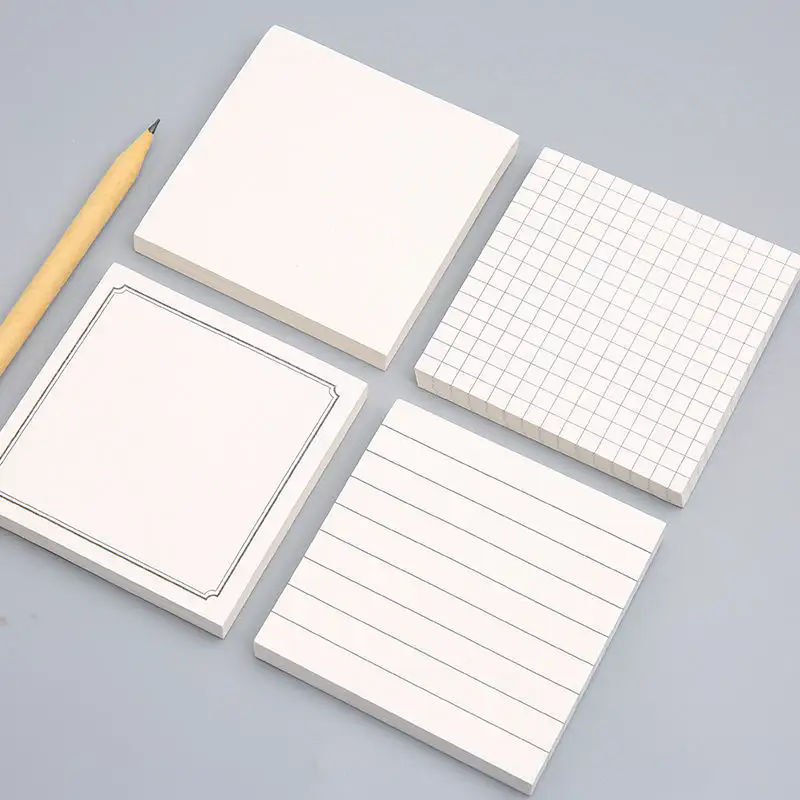
Evaluate standard lines against narrow college ruling or grid dots. Wide ruling offers eight millimeters of vertical space. Narrow college ruling provides around seven millimeters. Narrow lines suit small handwriting perfectly. Grid layouts support structural diagrams and mathematical equations. Ruling ink must remain extremely faint. Dark lines visually compete against your actual handwriting. Light gray or pale blue rulings reduce eye strain. Faint lines guide your writing without distracting from the actual content.
Binding types dictate lifespan and usability. Glue-bound pads offer quick, effortless page removal. Unfortunately, they often fail under heavy daily use. Pages can detach unintentionally during transport. Wire-o bindings lay flat but the metal loops can bend easily. Stitched bindings provide the highest durability for permanent records. Smyth-sewn notebooks allow pages to lay flat while locking them securely. You should match binding styles to expected document lifespans. Daily disposable notes need different bindings than permanent reference logs.
Procurement requires choosing between strict standardization and targeted specialization. You must decide whether to standardize a single mid-tier option globally. Alternatively, you can create a tiered procurement list based on distinct departmental needs. Both approaches offer unique logistical advantages.
Consider these best practices for tiering your supplies:
Audit current departmental usage volumes before making any changes.
Restrict heavy-weight premium pads to external-facing and executive roles.
Standardize 80gsm universally if managing multiple tiers becomes too complex.
Monitor inventory depletion rates to adjust future ordering volumes.
Tiered systems ensure everyone gets the right tools without unnecessary waste.
Environmental compliance requires careful, evidence-based verification. You must look for actual certifications like FSC or PEFC. The Forest Stewardship Council ensures raw materials come from responsibly managed forests. Avoid vague "eco-friendly" marketing claims entirely. Opting for 100% post-consumer recycled sheets involves certain texture trade-offs. Recycled fibers often feel rougher. They absorb moisture differently than virgin pulp.
Watch out for this common mistake: Do not assume recycled materials automatically perform well under fountain pens. They frequently require additional surface sizing to prevent aggressive feathering. Ensure your green initiatives do not accidentally ruin daily usability. You can find excellent papers balancing sustainability with premium writing performance.
Procure small sample batches of your shortlisted options. You need to test them using your most common office pens. Theoretical specifications only tell half the story. Real-world testing reveals how papers react to your specific environment.
Follow this numbered list for empirical testing:
Apply heavy highlighter strokes to check for immediate moisture bleed-through.
Write rapidly using liquid gel pens to test realistic drying times.
Use broad fountain pens to assess edge feathering and ghosting.
Perform a smudge test by rubbing the text immediately after writing.
Tear a single perforated sheet to evaluate edge cleanliness.
This empirical testing prevents large-scale procurement mistakes.
Consistent supply chains matter just as much as paper quality. Assess minimum order quantities closely. You must understand lead times for bulk restocks. Verify the consistency of material batches over time. Reliable vendors maintain identical GSM and sizing across different manufacturing runs. Some manufacturers secretly change paper mills, altering the texture entirely. You should request technical specification sheets for every batch. Confirm they use the exact same raw materials year-round. This consistency prevents sudden usability issues from disrupting your workflow.
Actionable rollouts require careful, systematic planning. Set up an initial pilot order for one specific department. Choose a team writing heavily, such as legal or administration. Gather user feedback after two weeks of daily use. Address any complaints regarding smearing or page tearing immediately. Observe whether they experience less workflow friction. You can safely roll out a company-wide procurement change once the pilot succeeds. Structured transitions prevent organizational resistance and ensure complete user satisfaction.
Choosing the perfect stationery requires balancing technical specifications against practical application. GSM, surface sizing, and binding formats directly impact daily productivity. You should audit your current supply to identify friction points. Test alternative formats designed specifically for your team's distinct workflows. Improve your archival stability by selecting acid-free, properly sized materials. Take action today by requesting a corporate sample pack. Evaluate your options carefully and consult a procurement specialist to refine your stationery strategy.
A: Standard copy paper is heavily optimized for dry toner and machine feeding. It lacks adequate surface sizing for liquid ink, causing immediate feathering. Dedicated note pages undergo specific sizing processes to reduce moisture absorption. They provide better writing friction and prevent ink from bleeding through the sheet.
A: A baseline of 80gsm works well for standard ballpoint pens and pencils. If your team frequently uses liquid gel pens, rollerballs, or fountain pens, you must upgrade to 90gsm or 100gsm. Heavier weights increase opacity, successfully stopping ink from ghosting on the reverse side.
A: Yellow legal pads traditionally helped lawyers distinguish their personal notes from printed white documents. Many users claim yellow paper reduces harsh glare and eye strain under fluorescent lighting. Functionally, the paper quality remains identical to white variants. The choice depends entirely on visual preference and categorical sorting habits.
A: Using fountain pens on standard low-weight paper usually results in heavy feathering and ghosting. The thin, unsized fibers act like a sponge. Fountain pens require coated or heavily sized paper, typically 90gsm or higher. This specific surface treatment ensures the liquid ink dries sharply on top of the page.